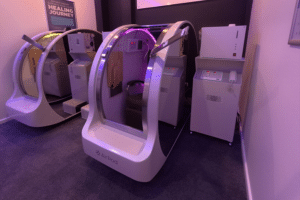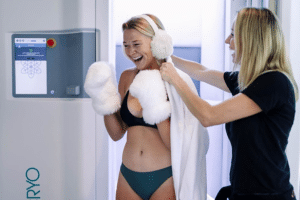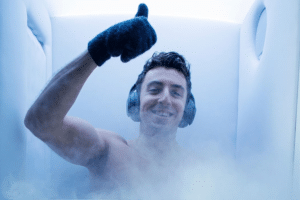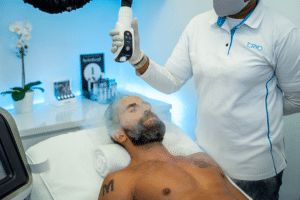

The therapeutic benefits of cryotherapy have been widely recognised in managing and treating a variety of health conditions, particularly in alleviating inflammation and pain. Recent medical research has shown that cryotherapy has numerous advantages in the field of preventive medicine, such as for migraine attack, asthma exacerbation, early onset of Alzheimer’s disease, chemotherapy-induced hair loss, rheumatoid arthritis, fibromyalgia and ankylosis spondylitis.
Cryotherapy For Rheumatoid Arthritis (RA)
Studies have highlighted the potential of cryotherapy in providing relief to patients suffering from Rheumatoid Arthritis (RA). RA is an autoimmune disorder which primarily affects the joints, causing swelling and pain. Bouzigon conducted three clinical studies involving RA patients, which found the effectiveness of whole-body cryotherapy in reducing inflammation, pain, fatigue and morning stiffness. In a study conducted in Finland by Hirvonen and colleagues, involving 60 RA patients, it was revealed that the application of cryotherapy, either in the form of whole-body cryotherapy at -110°C, application of local cold air at -30°C or using cold packs, yielded positive results with regards to reduction of pain and inflammation. Disease Activity Scores showed that patients with WBC at -110°C experienced a greater decrease in pain, but there was no significant difference in disease activity observed among the different treatment groups.
Cryotherapy For Migraine
New evidence has emerged in the potential use of cryotherapy in preventing the onset of migraines and reducing migraine pain. This was revealed in a randomised controlled trial involving the use of neck cooling wraps at the onset of migraine pain. It is believed that the vasoconstriction induced by cold application can counteract the vasodilation causing the migraine.
Cryotherapy For Asthma
Cryotherapy can aid in the prevention of acute asthma exacerbations. This is owing to its ability to induce a transient bronchodilatory effect, decrease histamine levels and improve lung function. A study on 28 asthmatic patients found that after treatment with Whole Body Cryotherapy (WBC), 9 of them experienced an improvement of their condition to starting levels. This demonstrates the capacity of cryotherapy to reduce bronchial tension and relax the bronchial muscles, leading to improved breathing capability.
Cryotherapy For Alzheimer’s Disease
Cryotherapy may also provide preventive benefits against the early onset of Alzheimer’s Disease. This can be attributed to its ability to alter vascular and inflammatory responses and reduce oxidative stress. Research has indicated that cryostimulation increases anti-inflammatory cytokines such as IL-6 and IL-10, while decreasing the production of pro-inflammatory cytokines IL-1a, IL-2 and IL-8. In addition, cryotherapy supports the activities of glutathione peroxidase and glutathione reductase, and boosts the levels of erythrocyte hemoglobin and uric acid antioxidants.
Cryotherapy For Alopecia
Cold application may also be effective in averting hair loss related to cryotherapy. Alopecia areata is a non-scarring hair loss disorder that affects anagen hair follicles. 19 patients with multiple bilateral Alopecia areata patches were treated over 4 months with localized cryotherapy every 2 weeks. Results showed a 1.6-fold increase in terminal hair count on the right scalp, while no significant change was observed on the left side. This demonstrates the non-invasive and simple nature of cryotherapy as a treatment for alopecia.
Cryotherapy For Fibromyalgia
Exposure to extreme cold has proven to help improve the quality of life for fibromyalgia patients by reducing pain and inflammation. A clinical trial found that whole-body cold based therapy (cryotherapy) can lead to faster recovery when combined with physiotherapy. This implies that cryotherapy should be taken into account as a treatment for fibromyalgia.
Cryotherapy For Ankylosis Spondylitis
Cryotherapy may also benefit patients with ankylosis spondylitis, a form of arthritis that mainly affects the spine and also causes chronic pain and discomfort. A trial with 20 in-patient and ten out-patient participants showed that after 28 days of therapy with whole-body cryotherapy, the overall disease activity decreased significantly compared to 4-week hospital treatment with thermotherapy. Functional improvements in terms of morning stiffness, abnormal fatigue, joint pain and subjective discomfort were observed in the in-patient group, but not in the out-patients. These results suggest that cryotherapy may have an independent effect on ankylosis spondylitis.
Conclusion
Evidence has demonstrated the potential benefits of cryotherapy in the prevention of a variety of health conditions. Cryotherapy has been found to reduce inflammation and pain, improve lung function and decrease vasodilation. In addition, it may also prevent hair loss, reduce the onset of migraines and Alzheimer’s disease, and improve the quality of life for those suffering from fibromyalgia and ankylosis spondylitis. Cryotherapy should be considered as a viable adjunct therapy in preventive medicine.